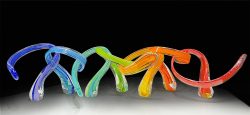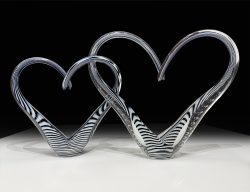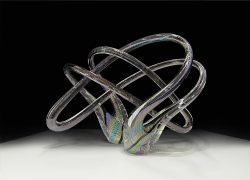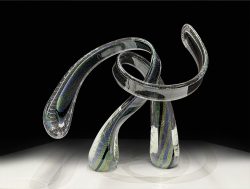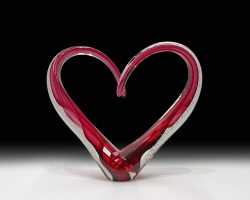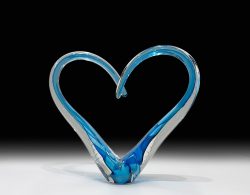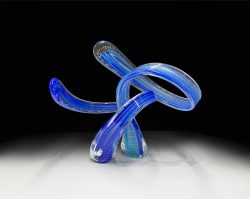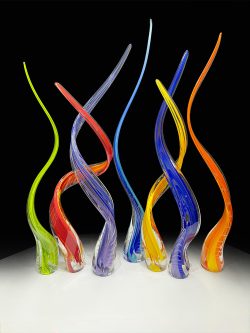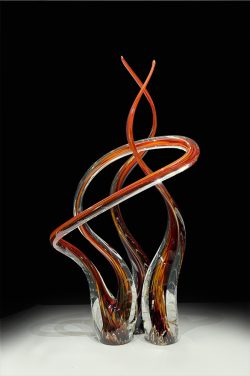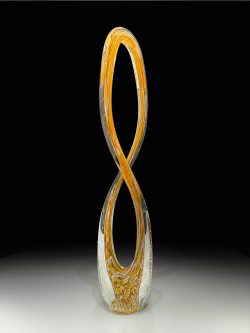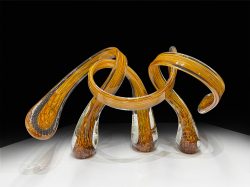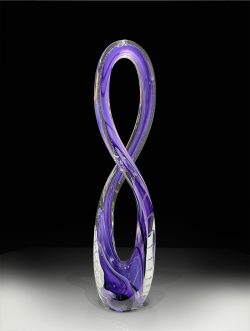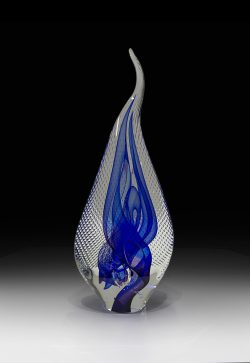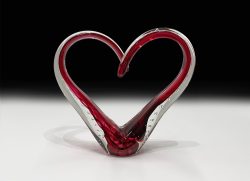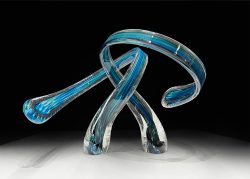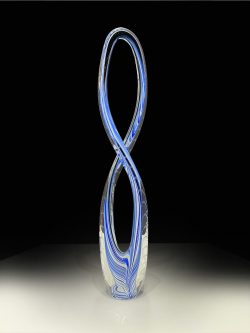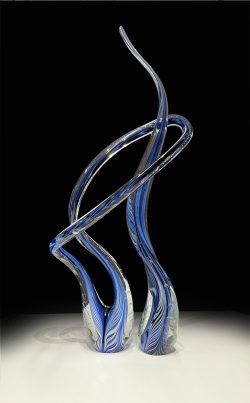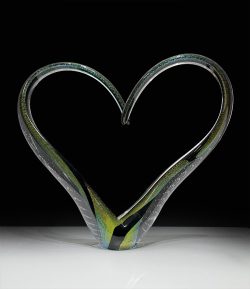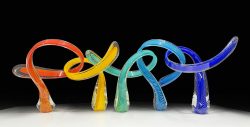
“5-Piece Threaded Nexus – Neon”
by: Scott Hartley$5,190.00


Scott Hartley is a Kansas-based master glassblower who grew up artistically experimenting with all different kinds of media. Throughout his early school-days, he found he expressed himself most meaningfully with a set of graphite pencils. Two-dimensional art, he felt, was the only outlet for his life at the time. Scott reflects, “I love art, and I knew that it would always play a huge role in my life.”
He graduated Valedictorian from high school, then went on to attend Southwestern College in Winfield—a small liberal arts college, which has one of the greatest science departments in the area. Scott’s priorities were to receive the finest education that he could, play basketball, graduate with a biology degree, and attend medical school. In the end, he discovered that biology was his passion, so he went on to become a high school biology teacher at Kapaun Mt. Carmel Catholic High School.
After marrying his high school sweetheart, Gwen, and starting a family together, Scott felt that there was still something missing in his life. In 1999 he quit his teaching job to become a full time artist and has never looked back. He opened his own studio in 2003. The studio is located in a former blacksmith shop that dates back to the 1930s. Scott finds that glass is the perfect marriage of both art and science.
There is more to the art of glassblowing than meets the eye. Simply seeing the finished product as a beautiful glass sculpture is not truly enjoying art glass. Just as watching your child grow from one day to the next, the process of glassblowing is part of the amazement and wonder of glass. Glass is made from a mixture of about 70% sand, soda ash, and several other chemicals. This mixture is then loaded into a glassblowing furnace, which reaches temperatures of 2,500 degrees. The furnace runs 24 hours a day, 7 days a week, 365 days each year.
While creating a piece, it is essential to keep it hot at all times using a reheating chamber that reaches temperatures of 2,500 degrees. Once the piece is completed and still hot, the piece is then broken off the pipe using precise marks and skill. The glass is placed in an annealing oven for 2 days to cool it to room temperature so as not to stress the glass and cause cracking. Finally, the glass is cut, ground, polished, cleaned, and signed which can take hours on some pieces. Once finished, the artistic journey is complete and the finished product is there for all to enjoy and cherish.
“After I pour myself into my glasswork, I believe that the glass speaks for itself and for me. Nothing gives me more peace of mind than the quiet roar of a glass furnace on a calm, clear day and me with a blowpipe in my hand and a piece of myself on the end.” – Scott Hartley